
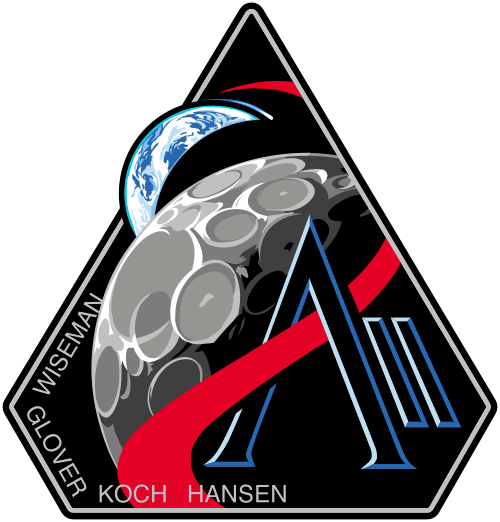
Canada is bound to leap light years in NASA Artemis Lunar Program. Canadian astronaut, Jeremy Hansen, will be one of four humans returning to the moon in more than fifty years. The Artemis II launch is all systems go with seven potential dates now confirmed for April 2026.
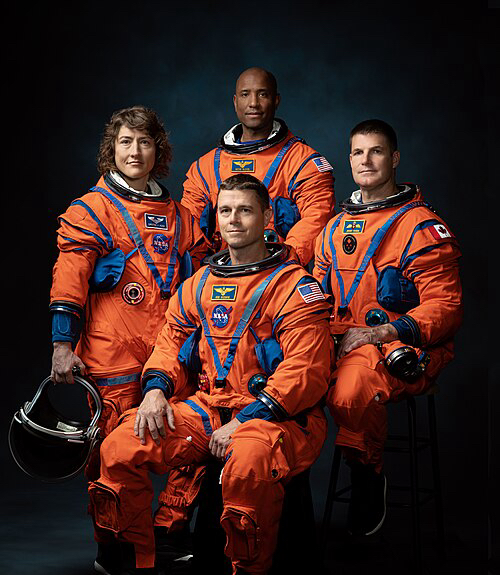
NASA’s Artemis Tour has been postponed twice since setbacks at earlier launch dates in February.
An updated Artemis Flight Readiness Review (FRR) was released on Thursday. The announcements confirmed a next earliest launch date no sooner than April 1, 2026 at 6:24PM.
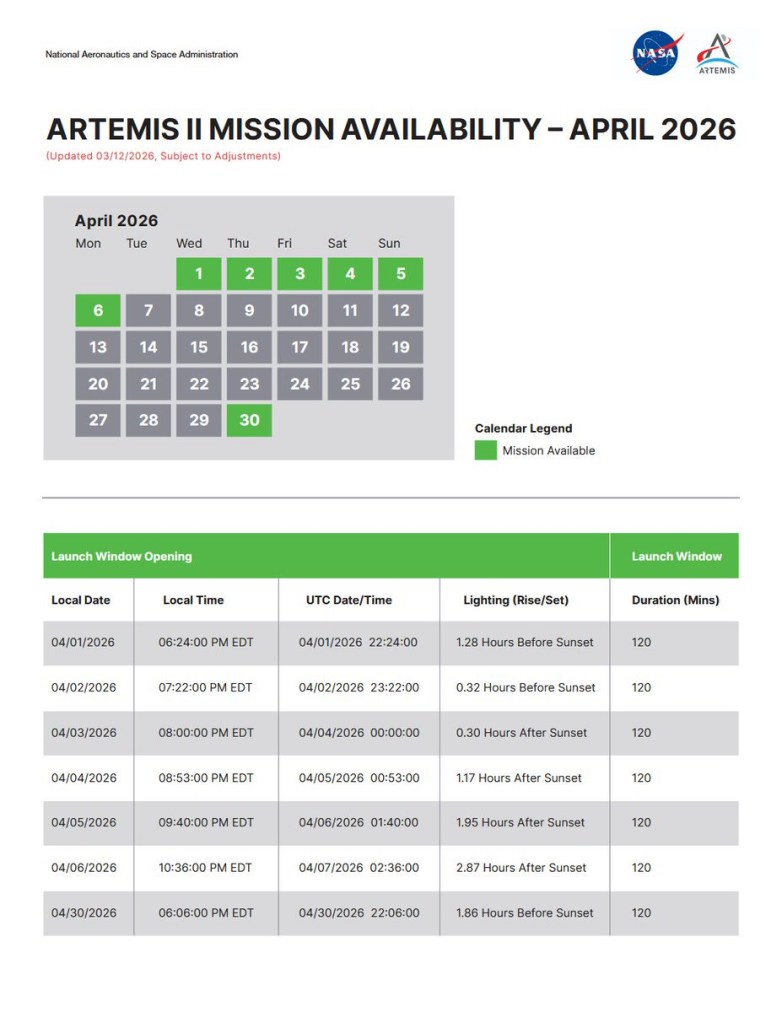
A seventh possible date of April 2nd at 7:22PM, has been added to the charts. NASA remains steadfast towards April with no plans to launch beyond the seven dates published.
NASA’s Artemis Flight Readiness Review
NASA’s Artemis Flight Readiness Review presents final strategic briefings in preparing for pre-launch quarantine. Members from all flight and ground control teams plus the Artemis Crew participated in damage control and risk mitigation assessments.
The FRR was held approximately two weeks after discovering a malfunction to a pressure-line seal in the quick release system.
When the line was charged with helium the seal would breach its functioning position. The displaced seal would then create a blockage in the flow of helium to the upper stage. NASA’s Space Launch System and Orion Spacecraft were then rolled back from wet-dress rehearsal.
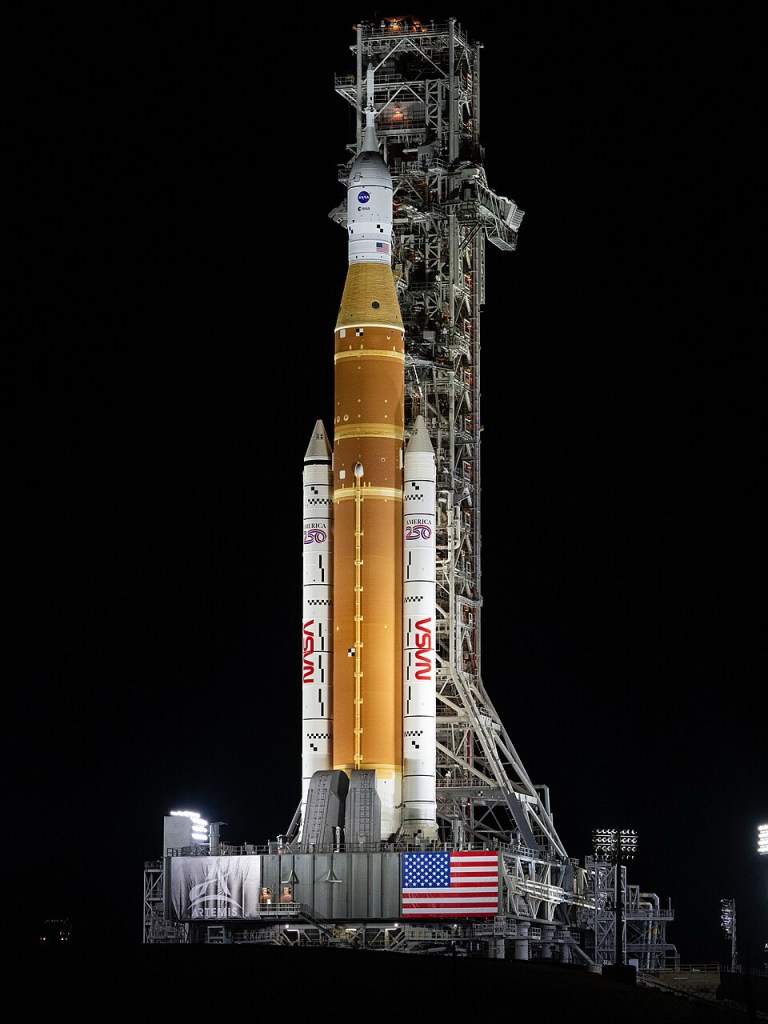
In just twenty-two days NASA’s SLS rocket and Orion Spacecraft have again been given a green light. Return to Kennedy Space Center is scheduled for March 19th. The crew is healthy and cleared to enter pre-launch quarantine on March 18th. A ground speed twelve-hour expedition and return to KSC VAB launch complex 39B will spin-down on March 27th. Just a few days before Artemis II orbits further in space than any humans have since Apollo 13.
Technical And Systems Risks Have Been Mitigated
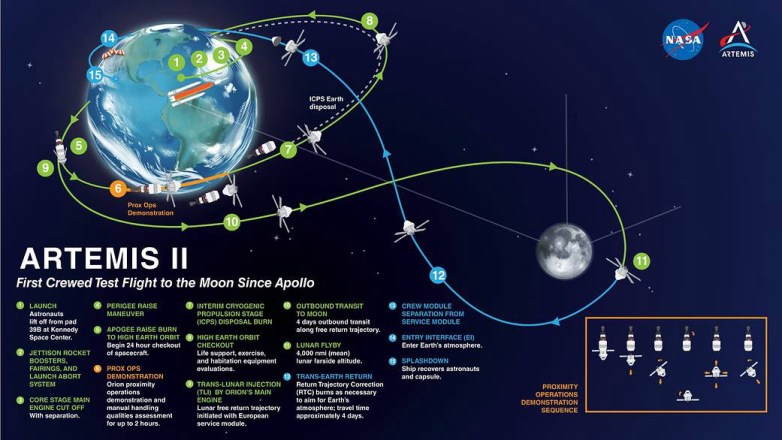
Technical and systems risks have been mitigated over the past three weeks. The greatest risk standing as identified by the FRR is Micro-Meteoroid Debris. Safety and security of the astronauts and mission are still assessed with communication as priority. Measures are taken in accordance to flight termination system and other response process checkouts.
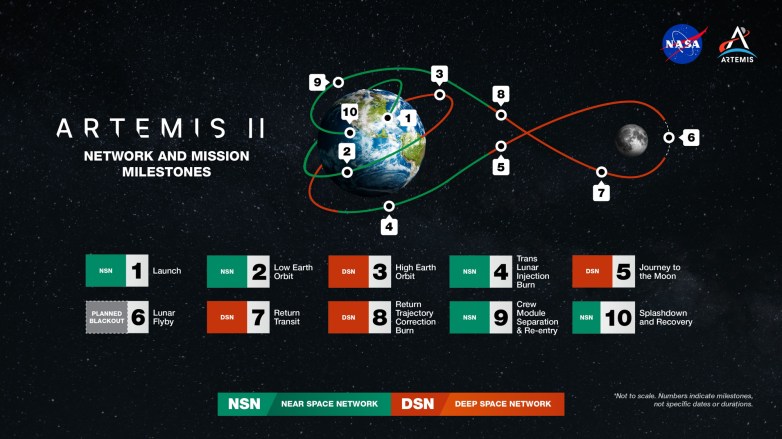
Burn procedure can be used as a safe measure and early detection to either orbit or abort a moon mission. You can watch and learn more about Artemis and other NASA programs at NASA’s YouTube channel. Join in for the launch and follow the entire ten day mission in Real Time.
Get Your Digital Boarding Pass
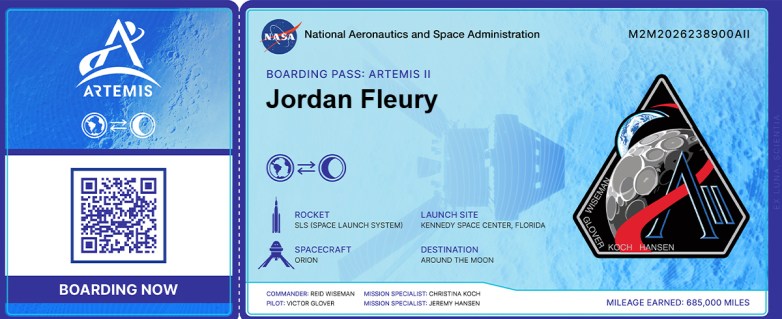
Get your digital Boarding Pass to Artemis II and Send Your Name To Space. Follow the link and enter your name. Then you can create a personal NASA PIN to get a unique digital boarding pass. Jeremy and the crew will be uploading an SD card into space!
In 2020 NASA Established The Artemis Accords
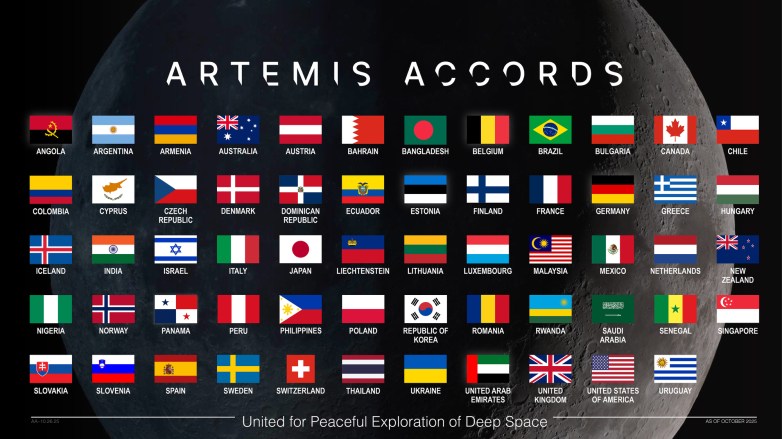
In 2020 NASA established the Artemis Accords. A common set of principles and guidelines to the shared safe-use and exploration of space. Although Artemis II will orbit the moon with a four astronaut crew there will be no landing. A timeline of the Artemis Lunar Program does have a trajectory to a human ability for interstellar travel.
In 2022 NASA’s SLS rocket and Orion Spacecraft completed Artemis I. The mission was a success but did not include human astronauts.
Artemis III Mission Is Scheduled For 2028
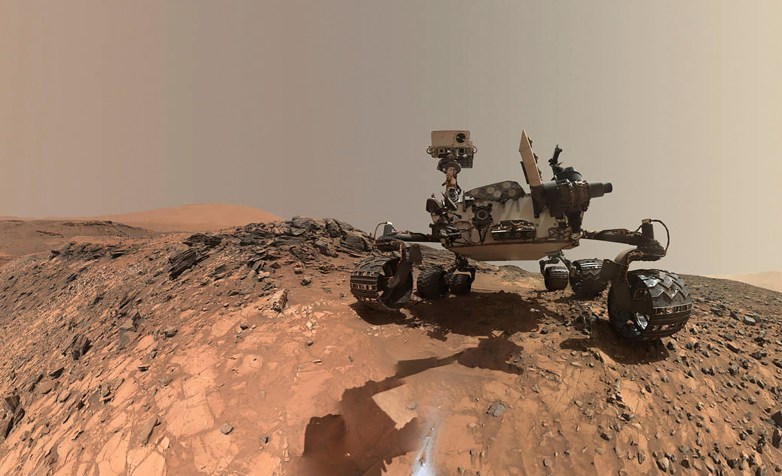
Artemis III is scheduled for 2028. The mission is to land on the moon with construction equipment and building materials. The mission will follow up from two decades of planning for an interstellar launch base.
Human relocation and occupation on another planet is necessary for any employment and education opportunities!
NASA Artemis Lunar Program Is On Pace
NASA Artemis Lunar Program is on pace for a long awaited Mars Mission. One of longevity with relation to our usual low-earth and high orbit travel. A proposed Mars Colony and Artemis IV mission are on the horizon for NASA’s longer-term lunar program plans.
Best of luck to the Artemis Crew with a big old Canuck salute to Jeremy Hansen. I will be covering more content from this mission and other NASA expeditions in 2026 and beyond.